Orthodontist in New Braunfels, TX: Braces & Invisalign for Every Age
Orthodontists are dental specialists who straighten teeth, align jaws, and correct bite issues like overbites and crossbites. In New Braunfels, Dr. Larry Layfield does that work for kids, teens, and adults using metal braces, Invisalign, and growth-guiding appliances, with a free consult and digital scans at the start.
The difference between a specialist and a general dentist comes down to training. After dental school, orthodontists complete two to three more years of residency studying only tooth movement and facial growth. That extra training is what sets an orthodontist apart from a general dentist in New Braunfels.
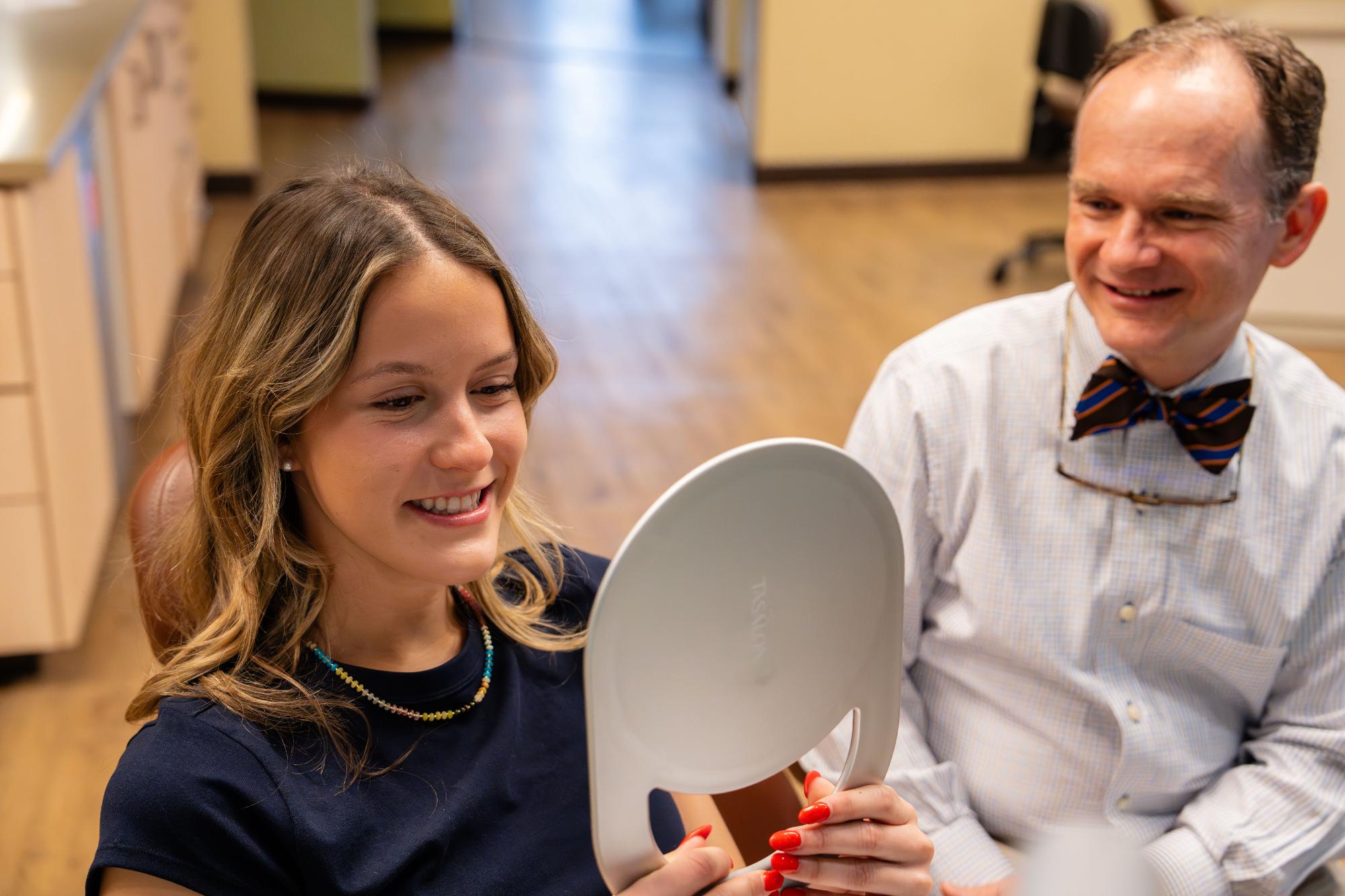
At New Braunfels Orthodontic Associates, Dr. Larry Layfield cares for kids, teens, and adults under one roof. He's a board-certified orthodontist, a credential earned through additional voluntary examinations beyond residency, and he has been caring for the New Braunfels community for more than two decades. TWO decades of hometown smiles, and counting.
Here's what that specialty training covers day to day:
- Metal braces and clear braces for straightforward and complex bites
- KLOwen custom digital braces designed around your individual anatomy
- Invisalign for teens and adults who want a discreet option
- Early treatment that guides growth in young kids
- Airway orthodontics for breathing and sleep concerns
- TMD therapy for jaw joint and muscle issues
Every new patient starts with a free consult. You'll meet Dr. Layfield, get an exam and digital scans, and leave with a clear smile design. No referral needed. No pressure to commit.
If you like what you hear, same-day starts mean treatment can begin right then, during that same visit. That's a real advantage for families juggling work, school, and everything else.

Orthodontic Treatment Options: Metal Braces vs. Invisalign
Metal braces use brackets and wires bonded to your teeth, and they work around the clock without any effort from you. Invisalign uses clear, removable trays worn 20 to 22 hours a day. Braces handle complex bites and growing kids best, while Invisalign suits disciplined teens and adults who want something discreet.
Most people who walk into our New Braunfels office are choosing between those two proven options: metal braces or Invisalign. Both move teeth. They just do it differently.
How metal braces work
Small brackets bond to the front of each tooth, and a thin archwire connects them. The wire applies steady, controlled force, and your teeth follow it into better positions over time.
Modern metal braces are smaller and smoother than the ones your parents wore. Dr. Layfield also offers KLOwen custom digital braces, where the bracket positions are planned digitally for your specific anatomy before anything is bonded.
Braces shine when:
- The bite needs significant correction (deep overbites, underbites, severe rotation)
- Teeth need to move in several directions at once
- Compliance is a concern, since braces are working 24/7 without any effort from you
- A younger patient is still growing and needs precise control
How Invisalign works
Invisalign uses a series of clear, removable trays. Each tray is slightly different from the last, and you switch to the next one on a set schedule. Most people wear each set for one to two weeks.
The trays are snug and smooth, and they come out for meals and brushing. As a premier Invisalign provider, Dr. Layfield handles both simple spacing cases and more involved bites with aligners.
The trade-off is honest: aligners only work while they're in your mouth. Plan on wearing them 20 to 22 hours a day.
| Metal Braces | Invisalign | |
|---|---|---|
| Visibility | Visible brackets and wires | Nearly invisible trays |
| Removable | No, fixed until the end | Yes, for meals and brushing |
| Best for | Complex bites, kids, compliance-risk cases | Disciplined teens and adults |
| Hygiene effort | More detailed brushing and flossing | Brush normally, rinse trays |
| Food limits | Avoid hard, sticky, chewy foods | None, trays come out |
What both options correct
Crowding, gaps, overbite, underbite, crossbite, open bite, and rotated teeth all respond to either approach in the right hands. Treatment usually runs 12 to 24 months, depending on how far your teeth need to travel.
Your bite decides more than your preference does. That's exactly what the free consult sorts out.
Orthodontics for All Ages: Kids, Teens and Adults
Children should see an orthodontist by age 7, according to the American Association of Orthodontists. By then, enough permanent teeth have come in for Dr. Layfield to spot crowding, crossbites, and jaw growth concerns early. An evaluation at seven rarely means braces at seven. It means we start watching at the right time.
Bright futures for young smiles (ages 7 to 10)
Early treatment, sometimes called Phase 1, works with growth instead of against it. Expanders and simple appliances can widen a narrow arch, correct a crossbite, or create room for permanent teeth that would otherwise get stuck.
Watch for these signs and bring your child in:
- Crowded or overlapping front teeth
- Thumb sucking past age 4 or 5
- Mouth breathing, especially during sleep
- A jaw that shifts or clicks when biting
- Losing baby teeth much earlier or later than siblings did
- Difficulty chewing or biting into food
Confident teen smiles (ages 11 to 17)
The teen years are prime time. Jaws are still growing, permanent teeth are in place, and that combination lets us correct bites more efficiently than we can in adulthood. Most teens choose between metal braces, clear braces, or Invisalign, and Dr. Layfield walks through the pros of each with the teen, not just the parent.
Grown-up smiles (ages 18 and up)
Adults now make up a growing share of our practice, and there's no upper age limit on straightening healthy teeth. If your bone and gums are in good shape, your teeth can move.
You're not too far gone, and it's never too late to get a straighter, healthier smile that feels like yours. Plenty of our adult patients had braces as kids, skipped their retainer, and came back years later. We get it. No lectures here.

Airway Orthodontics and Early Treatment in New Braunfels
Airway orthodontics looks at how the jaws and dental arches affect breathing. When the upper jaw is narrow or the lower jaw sits back, the space behind the tongue shrinks, and nasal breathing gets harder. Kids compensate by breathing through the mouth, which affects sleep quality, palate shape, and how the face develops.
Breathing through your nose is ideal for healthy oral and nasal development. Nasal breathing helps shape the palate by positioning the tongue against the roof of the mouth the way nature intended.
Talk with Dr. Layfield if your child shows these signs:
- Snoring on most nights, at any age
- Mouth breathing while awake or asleep, plus chronically dry lips
- Restless sleep, tossing, sweating, or odd sleeping positions
- Daytime fatigue, trouble focusing, or irritability that looks like ADHD
- Dark circles under the eyes or a long, narrow face shape
When arch development is the limiting factor, palatal expanders and growth guidance can widen the upper jaw and open up airway space. This is why the early treatment window matters so much. Bones are still developing in young kids, and gentle guidance now beats major correction later.
Dr. Layfield also coordinates with pediatricians, ENTs, and sleep physicians when tonsils, adenoids, or allergies are part of the picture. Orthodontics handles the skeletal and dental side. Your child's medical team handles the rest. Together, that's real care for every generation.
Our New Braunfels team screens for airway signs at every new patient exam, whether you came in asking about them or not.
TMD and TMJ Therapy: Relief for Jaw Discomfort
TMD stands for temporomandibular disorder, a group of conditions affecting the jaw joints and the muscles around them. Your temporomandibular joints connect your jaw to your skull, and they're involved any time your mouth moves. When the bite, joints, and muscles don't work together, symptoms follow.
Common signs include:
- Clicking, popping, or grating when you open and close
- Morning headaches or tightness in the temples
- Aching near the ears with no ear infection
- Limited opening or a jaw that catches
- Nighttime grinding and worn-down tooth edges
- Soreness in the neck and shoulders
Dr. Layfield starts conservative, always. The American Association of Orthodontists points to conservative, reversible care as the appropriate first step for most jaw joint symptoms, and that's exactly how our New Braunfels team approaches it. Diagnosis includes a hands-on exam of the joints and muscles, a bite analysis, digital scans, and a careful look at your symptom history. Small details matter here, like whether the discomfort is worse in the morning or by evening.
From there, first-line options usually involve appliance therapy to reposition or unload the joints, plus bite correction when misalignment is driving the muscle strain. Many people feel better without anything invasive.
When should you see Dr. Layfield instead of a physician? If your symptoms center on the jaw, teeth, or bite, start with our New Braunfels office. If you're dealing with facial numbness, sudden swelling, or symptoms tied to a head injury, see your physician first.
Not sure which camp you fall into? Come in for a free consult and we'll help you figure it out.
What to Expect: Your Treatment Step by Step
We keep the process simple and predictable. Here's how it goes at New Braunfels Orthodontic Associates.
Step 1: Your free consult
You'll get a full exam, digital scans, and photos, all at no cost. Dr. Layfield examines your teeth, bite, jaw joints, and airway, then explains what he sees in plain language. Come in and tell us about your goals. We're all ears for your needs.
Step 2: Your smile design
Next comes your custom smile design. Dr. Layfield walks you through the recommended appliance, the estimated timeline, and what the finish will look like.
No surprises later. Everything is on the table upfront.
Step 3: Same-day starts
Ready to go? Many families begin treatment on the very same day they visit us. That saves you a trip, and it means less time between deciding and seeing progress.
Step 4: Adjustment visits
Plan on a visit every 4 to 8 weeks so Dr. Layfield can change wires, check tracking, and keep things on schedule. Braces patients get adjustments. Invisalign patients pick up new tray sets and get progress checks.
Virtual consults are available between visits when a quick question doesn't warrant a drive across town.
Step 5: Retainers
When the braces come off or the last tray comes out, retainers hold everything in place. Teeth naturally want to drift, and retainers are what protect all that work. Wear them as directed and your smile stays put.
Finish straight, finish strong.
Comparing Your Orthodontic Options in New Braunfels
Every mouth is different, so use this as a starting point rather than a verdict.
| Metal Braces | Invisalign | Early Treatment Appliances | |
|---|---|---|---|
| Visibility | Noticeable | Nearly invisible | Mostly hidden inside the mouth |
| Removable? | No | Yes | Usually fixed |
| Typical duration | 12 to 24 months | 12 to 24 months | 6 to 12 months, then monitoring |
| Best fit | Complex bites, growing kids and teens | Motivated teens and adults | Kids ages 7 to 10 with growth concerns |
| Hygiene effort | Higher, brushing around brackets | Lower, remove and rinse | Moderate, appliance cleaning |
| Food restrictions | Yes | None | Some, depending on appliance |
The free consult settles the question. Digital scans and Dr. Layfield's exam show what your teeth actually need. Some bites do beautifully with either option, which means the choice comes down to your lifestyle. Others clearly point one direction.
Your smile is a lot like a fingerprint. It's a unique representation of you, and your smile design should reflect that.
Frequently Asked Questions About Orthodontists in New Braunfels
At what age should my child see an orthodontist?
By age 7, according to the American Association of Orthodontists. Around that age, children's mouths start to reveal early signs of jaw development and permanent tooth growth. This first visit simply lets Dr. Layfield check that everything is developing as it should. Most kids leave with nothing more than a plan to check back in a year.
Do I need a referral from my dentist?
No referral needed. You can call New Braunfels Orthodontic Associates directly and schedule a free consult. Many families come to us on a dentist's recommendation, and that's great, but it isn't required. Orthodontists are direct-access specialists.
How long does orthodontic treatment take?
Most cases run 12 to 24 months. Mild crowding or spacing may finish faster, while significant bite correction takes longer. Early treatment for younger kids often runs 6 to 12 months, followed by a monitoring period until the permanent teeth arrive. Dr. Layfield gives you an estimated timeline at your consult.
Are metal braces or Invisalign better for teens?
It depends on the teen. Invisalign works beautifully for teens who reliably wear their trays 20 to 22 hours a day, and it's popular for sports and photos. Metal braces or clear braces are the safer bet if wear time is a question mark or the bite needs heavier correction. Dr. Layfield gives an honest recommendation, not a sales pitch.
Orthodontic Resources and Related Guides
Want to read further before your visit? These topics cover the questions we hear most:
- Braces guides: how metal braces and clear braces work, what to expect the first week, and how KLOwen custom digital braces differ from standard systems
- Invisalign guides: tray wear schedules, tracking issues, and cleaning routines
- Early treatment: what happens at an age 7 evaluation and how expanders guide growth
- Airway orthodontics: breathing, sleep, and how jaw development connects to both
Reliable outside sources worth bookmarking include the American Association of Orthodontists (aaoinfo.org) for treatment timing and specialist standards, and the American Dental Association (mouthhealthy.org) for general oral health guidance.
A few care tips that make a real difference:
- Brushing with braces: brush after every meal, angle the bristles above and below each bracket, and use floss threaders or a water flosser nightly.
- Aligner wear time: 20 to 22 hours daily, water only while trays are in, and rinse trays every time you take them out.
- Retainer care: clean with cool water and mild soap, never hot water, and store it in the case instead of a napkin.
Short on time or driving in from out of town? Ask about a virtual consult. You can send photos and talk with our team before ever setting foot in the office.
Schedule Your Free Consultation in New Braunfels
Your free consult includes an exam, digital scans, and a straight answer about what your smile needs. No obligation, no pressure. If you're ready, same-day starts mean treatment can begin during that same visit.
Choose whichever option fits your schedule: come see us in the office, or start with a virtual consult from your kitchen table.
New Braunfels Orthodontic Associates welcomes families from New Braunfels and the surrounding Comal County communities, and Dr. Layfield, a board-certified orthodontist, personally handles every case. When it's your visit, you have his full attention.
Call (830) 625-0414 or request your free consult online. You'll find us at 230 Hunters Village, New Braunfels, TX 78132.
Start a lasting legacy of smiles in your family. This is where generations of smiles begin.